
Case study · Medical aesthetics
A Squarespace refresh that became a complete medical-aesthetics website.
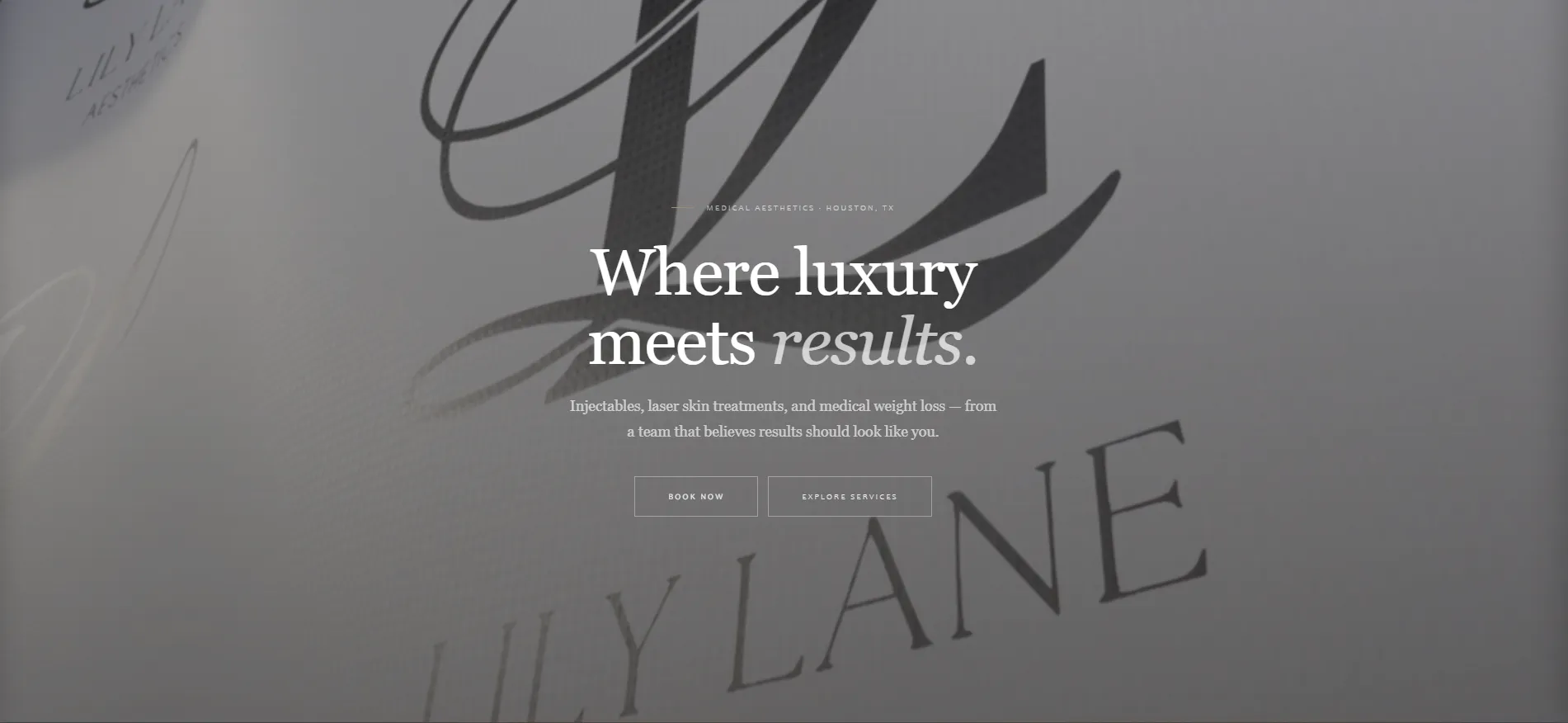
Lily Lane Aesthetics is a medical-aesthetics practice in the Memorial area of Houston. Webbify was engaged to improve the site, its structure, and its search visibility. The work grew, deliberately, into a custom WordPress redesign, a service architecture built around patient intent, and a platform migration.
- Industry
- Medical aesthetics, Houston (Memorial area)
- Scope
- Redesign, Squarespace to WordPress migration, service architecture, local and technical SEO
- Status
- Live
- Outcome metrics
- Not published
Verified performance figures for this project are not published. This case study describes the problem, the reasoning, and the work completed.
The challenge
Luxury, credibility, and clarity had to coexist on a phone screen.
The site had to feel personal and refined without reading like a generic med-spa template.
The practice offers aesthetic consultations, injectable treatments, skin treatments, wellness-related services, and personalized treatment planning. Prospective patients needed to understand its approach, discover the right treatment, learn how a consultation works, and feel comfortable getting in touch. Most of them would do that on a phone.
That put several goals in tension: a luxury visual presentation and medical credibility; local Houston search visibility and clear service information; founder storytelling and compliance-conscious medical content. The original brief was a limited refresh and foundational SEO on Squarespace: restructure the homepage, add a dedicated page for the Lily Lift, build individual service pages, add educational content, and improve Houston-specific relevance.
The positioning was clear from the start. Lily Lane is a personalized, provider-led practice, not a discount med spa. The website could not lean on promotions, urgency, or stock med-spa phrasing to make its case.
The decision
Why the refresh became a migration.
The real requirements outgrew the platform. Forcing them into it would have produced a compromised site.
As the work progressed, the luxury presentation, the mobile experience, and the service architecture the practice needed kept running into template constraints. Separate mobile hero imagery, custom-coded sections, an expanded set of treatment pages, and sitewide SEO changes were all easier to do properly on a platform Webbify could fully control. The engagement expanded into a full WordPress rebuild, and the change was made in the open rather than absorbed quietly.
Kept
- The original goals: a restructured homepage, a dedicated Lily Lift page, individual service pages, and foundational SEO
- The practice positioning: personalized, provider-led, and refined rather than high-volume
- Content worth carrying over, migrated from Squarespace rather than rewritten for its own sake
- Houston and Memorial-area relevance as the local focus
Rebuilt
- The platform: a custom WordPress implementation in place of the Squarespace template
- Page sections in custom HTML, CSS, and JavaScript outside the standard theme
- Separate desktop and mobile hero systems with their own imagery and crops
- An expanded service architecture, education section, and out-of-town patient page
A migration is an SEO-sensitive event. The point was to improve the site without discarding what already worked, so redirects, URL handling, and indexing were planned before anything moved. That is the same approach Webbify uses on any website migration.
The work
Strategy, design, custom code, SEO, and launch, handled as one system.
Architecture and content
- Search-intent analysis separating brand, commercial, informational, and navigational queries
- Service categories routing to individual treatment pages, each with one clear purpose
- The Lily Lift page, written so recommendations depend on a consultation
- Provider and practice storytelling, an education section, and a travel guide for out-of-town patients
Design and development
- A luxury editorial visual system: large photography, warm neutrals, serif display type
- A reusable layout for treatment pages so new services do not need new design
- Custom-coded sections with versioned assets so browsers pick up updates after deploys
- Image selection, focal-point control, and responsive behavior tuned per device
SEO, migration, and QA
- Unique titles and descriptions, one H1 per page, breadcrumbs, and descriptive internal links
- Redirect planning from retired Squarespace URLs so existing search equity carried over
- A staging environment, database and file migration, DNS, SSL, and form testing at launch
- Quality checks across iPhone, Android, foldable, tablet, and desktop viewports
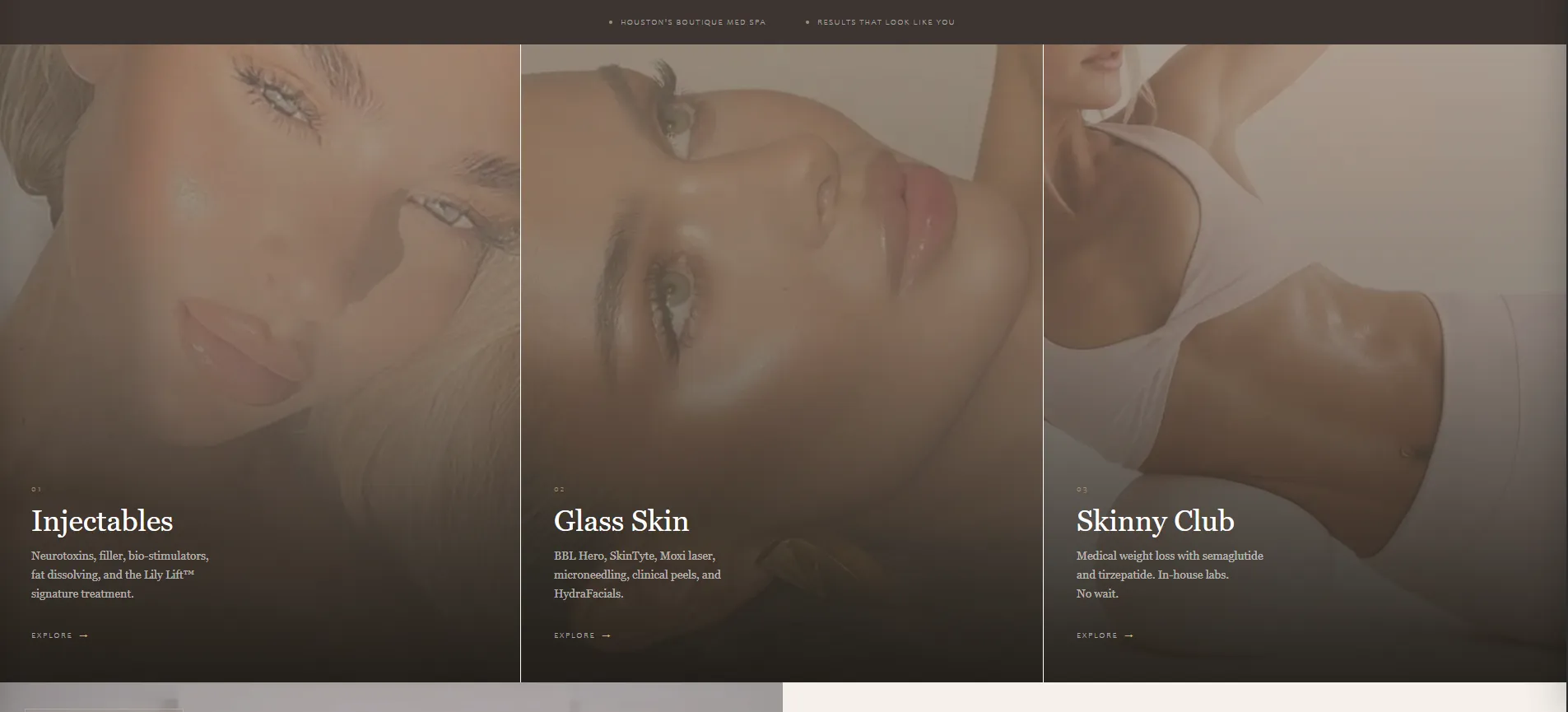
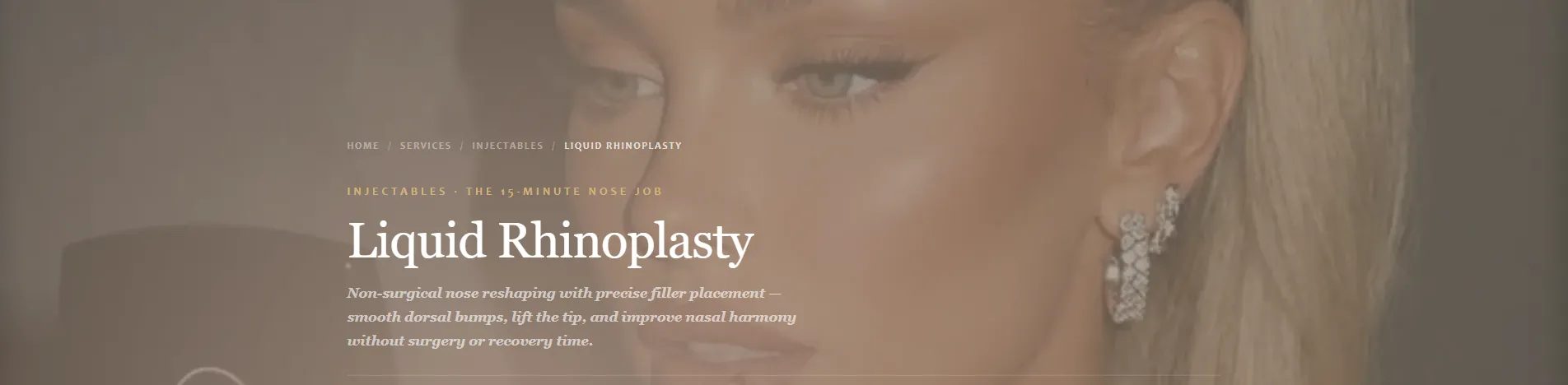
Mobile was designed as its own presentation, not a squeezed desktop layout: separate hero images and crops, viewport-relative hero heights, condensed headings, stacked buttons, and repositioned breadcrumbs. The responsive system was refined through repeated device testing, and the site has been tested across a range of viewport sizes from narrow phones to large desktop displays. Design details for this kind of practice are covered on the med spa websites page.
Outcome
What the practice has now.
A site it owns, structured to grow, with the reasoning documented.
- A custom WordPress site the practice owns, with the design logic documented outside the theme editor
- A service architecture organized around what patients search for, not one page per keyword variant
- A signature-treatment page, an education section, and travel guidance for out-of-town patients
- Desktop and mobile presentations designed separately, each with its own hero imagery
- Technical SEO and internal-linking foundations ready for ongoing content work
Verified performance figures for this project are not published. Search-ranking, traffic, booking, and revenue changes are only published with documentation, and this case study describes the problem, the reasoning, and the work completed instead. What it demonstrates is that Webbify can take a project well past a template refresh, own strategy through launch, and adapt when scope grows, while respecting the constraints that come with medical-aesthetics content. The same standards apply to every Houston web design project.
More work
All case studies →Have a project that might outgrow its template?
Tell us about the practice or business and the current site. We will review it and recommend an approach before anything is scoped.