
Case study · Industrial services
Repositioning an industrial vapor company around the services customers search for.
NanoVapor is an industrial vapor-management company working with underground storage tanks, fuel systems, vapor removal, tank purging, and related safety processes. Webbify worked on the website's strategy, positioning, page architecture, content structure, and SEO. The redesign is a prototype in progress, described here as exactly that.
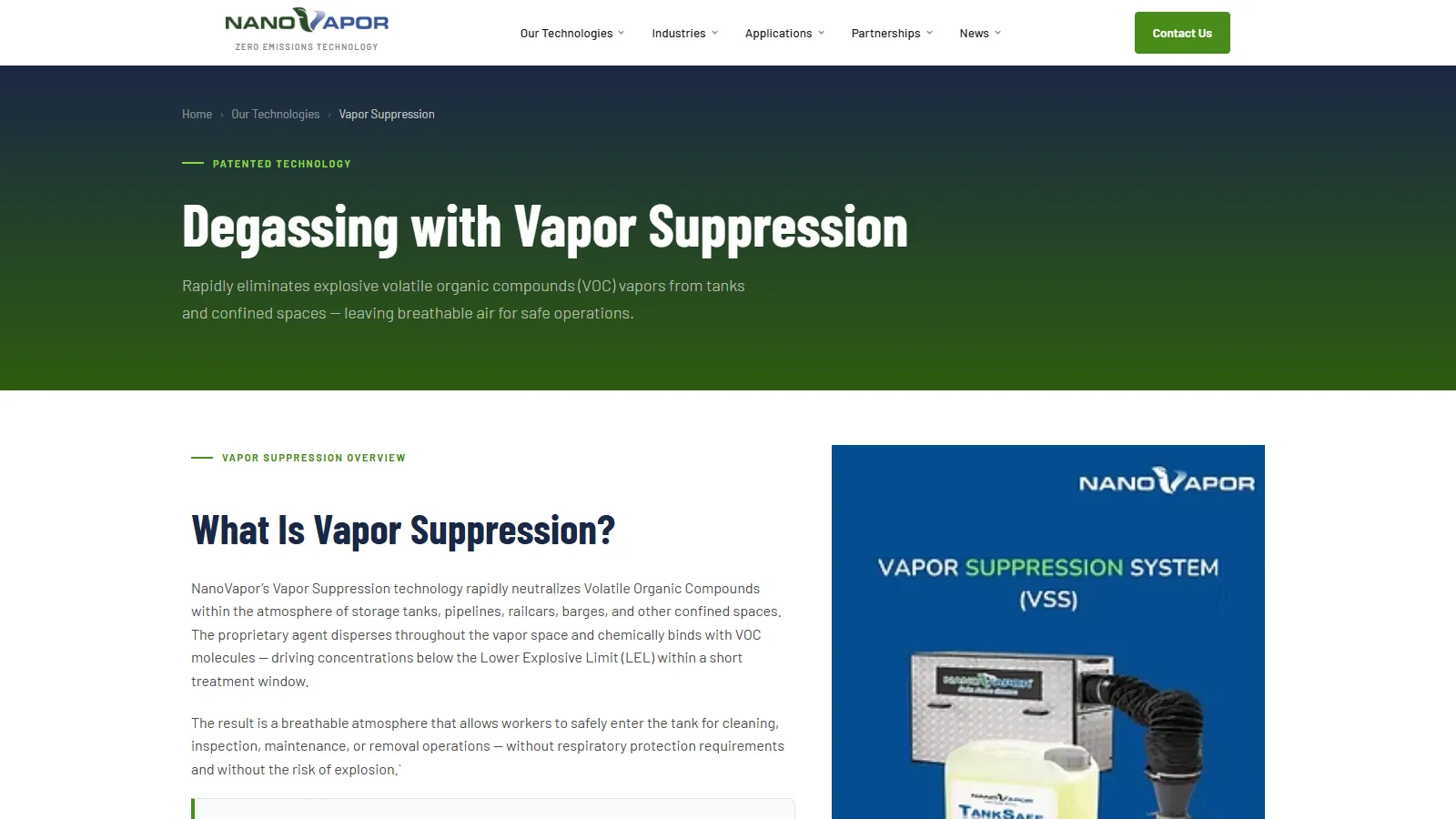
- Industry
- Industrial services, vapor management (Houston and Texas)
- Scope
- Website strategy, service positioning, page architecture, content structure, technical SEO, staging
- Status
- Prototype
- Outcome metrics
- Not published
This redesign has been developed in a staging environment and is not presented as launched. No ranking, traffic, or lead figures are published for this project.
The challenge
The website described equipment. Customers were searching for an outcome.
A specialized service that is hard to explain is also hard to find, unless the site is built around the problem.
NanoVapor's technology and services are highly specialized. The existing site presented vapor-control equipment first, which made sense to people who already knew the company and very little to someone with an underground storage tank that had to be made safer before work could begin.
The site needed to explain industrial processes clearly without oversimplifying the service, making unsupported safety claims, confusing equipment with service delivery, or hiding capabilities behind product language. It also had to reach a wide range of readers: tank owners, fuel-system operators, environmental contractors, safety teams, facility managers, and compliance staff, none of whom share the same technical vocabulary.
The customer problems were concrete: hazardous vapors that need removing from a tank, lower explosive limit readings that stay too high, a tank that has to be purged before inspection, repair, cleaning, removal, or closure. Those problems, not the equipment, are what people type into a search box.
The decision
From product to service.
The central shift: position NanoVapor as a provider of underground storage tank degassing and vapor-removal services.
Search behavior showed stronger intent around services than around equipment. Reorganizing the site around UST degassing let the architecture focus on the jobs prospective customers are trying to get done, while the equipment material stayed available as proof of how the work is carried out. The same reasoning drives Webbify's Houston SEO services: match pages to what people are actually looking for.
Kept
- The equipment and technology material, moved into a supporting role rather than deleted
- Existing video and press content, organized and linked to its original sources
- The technical depth that gives the company credibility with engineers and safety teams
- Houston, Greater Houston, and Texas as the initial geographic focus
Rebuilt
- The primary commercial page, now about underground storage tank degassing and vapor removal
- The page architecture, organized around customer problems and real applications
- Content written for decision-makers first, with the technical detail kept in reach
- The contact workflow, redesigned to collect the project information a quote needs
Two rules shaped the architecture. Supporting pages exist only where they address a meaningfully distinct need, so tank purging and LEL reduction get their own pages and near-synonyms do not. And no location pages are created for cities or states where service availability has not been confirmed.
The work
Research, architecture, and content built for buyers who are not engineers.
Search-intent research
- Keyword research across UST degassing, tank purging, vapor removal, and LEL reduction themes
- Commercial queries (a degassing company, a quote) separated from informational ones (what is LEL, when does a tank need purging)
- Search terms mapped to specific pages instead of repeated across every page
Architecture and pages
- One primary service page for UST degassing, with tank purging and LEL reduction as genuinely distinct supporting pages
- Application sections for inspection, repair, removal, closure, cleaning preparation, and fuel-system maintenance
- Technology, industries served, press, FAQ, and request-a-quote pages planned so similar terms do not overlap
Content, media, and conversion
- Technical content organized so buyers understand the process, the preparation, and what affects scope
- Video integration and press organization, each item pointing to its original source
- A quote workflow collecting tank type, capacity, stored product, current status, location, and timeline
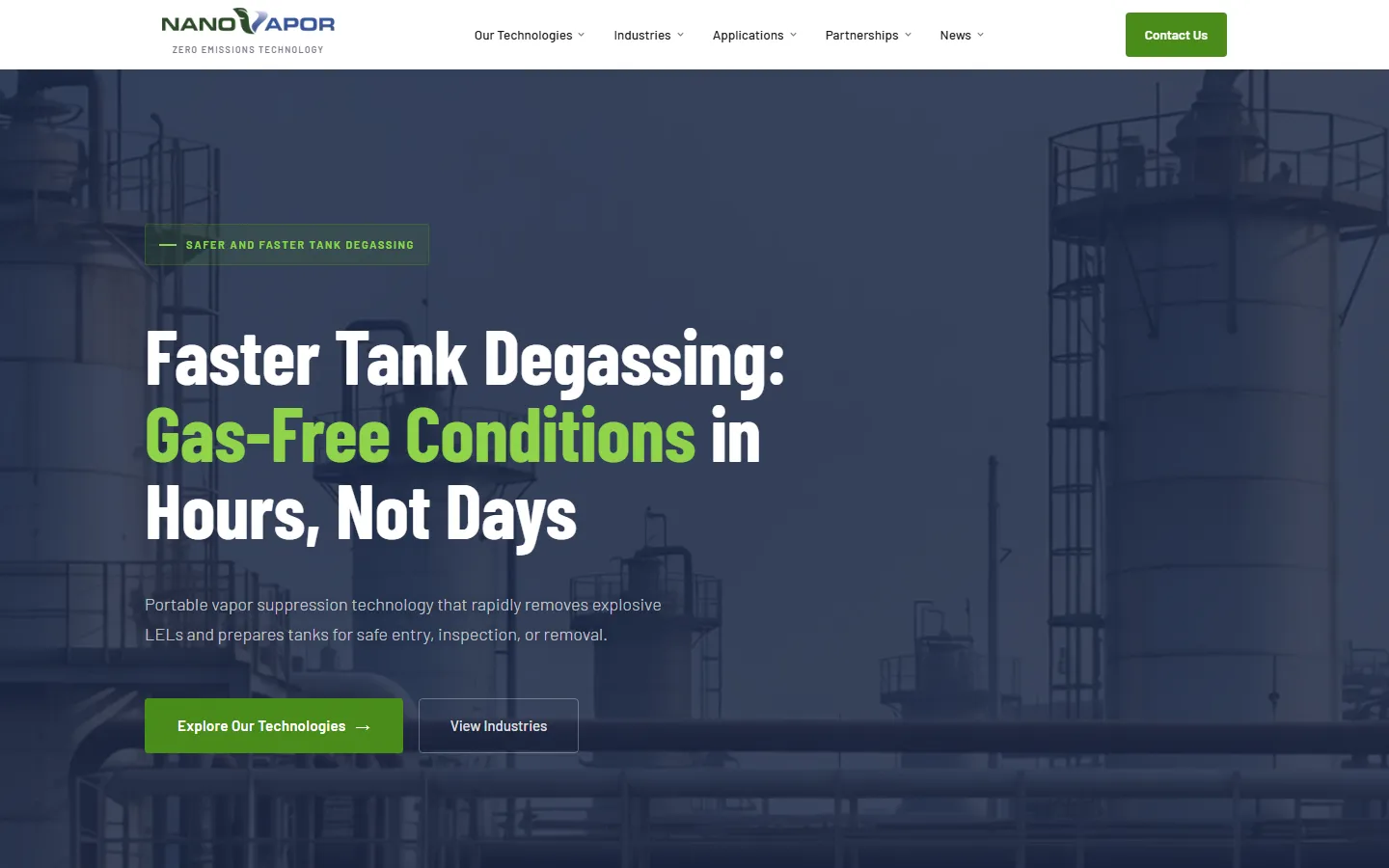
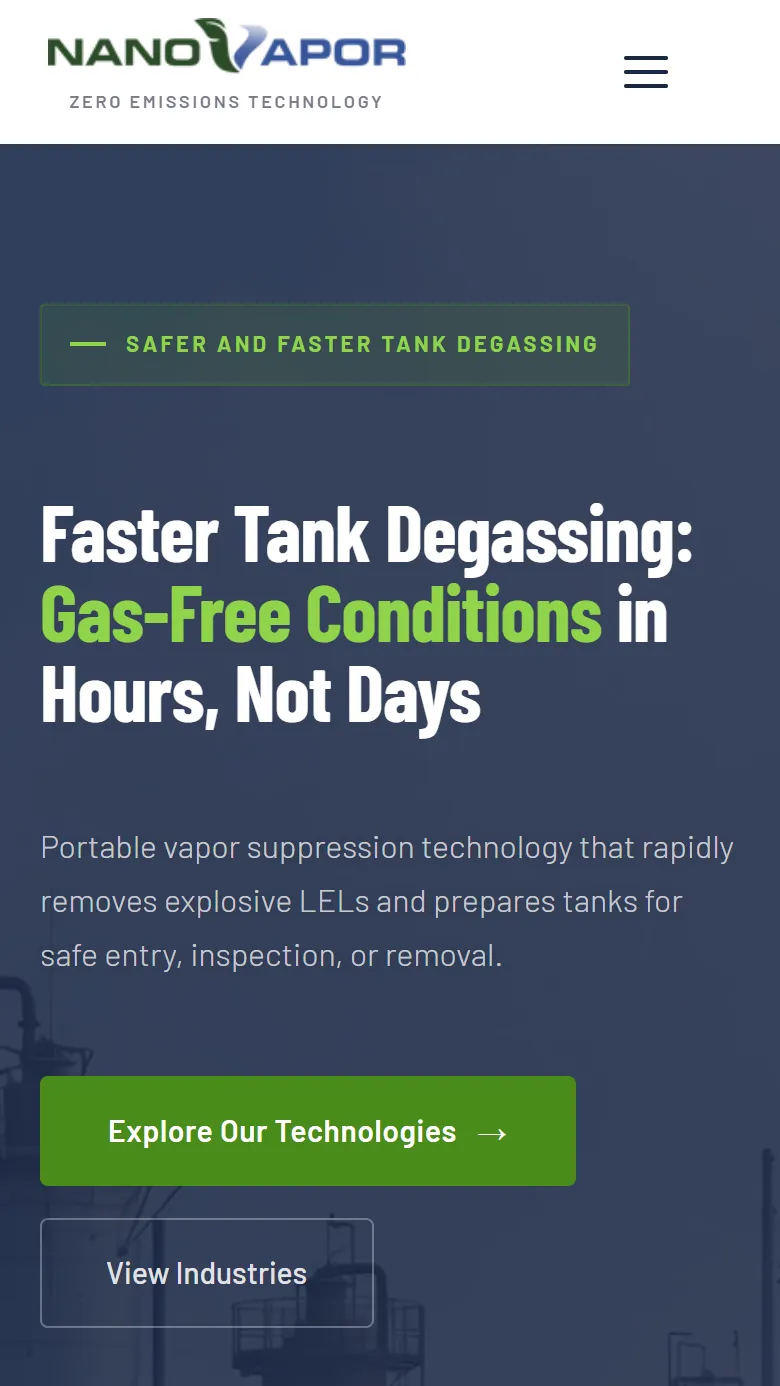
The visual direction is industrial, technical, and clean: real equipment, tank sites, field operations, and process diagrams, and none of the flames, hazard imagery, or futuristic effects that make an industrial site less credible. Every technical statement about safety, speed, emissions, or results is treated as a claim that needs verification before it is published, which is the standard for all of Webbify's industrial services work.
Outcome
Where the prototype stands.
A service-first structure, ready to launch when the company is.
- A prototype site with a service-first architecture built around UST degassing and vapor removal
- A keyword strategy that matches pages to the problems customers describe, not to equipment names
- Technical content restructured for buyers, with equipment detail kept as supporting material
- Technical SEO and internal-linking principles applied throughout the prototype
- A structure that can support broader service areas once the company confirms its operational reach
Because the redesign is a prototype, no performance results exist to report, and none are implied. What the project demonstrates is Webbify's ability to work with a technical business whose services are difficult to explain and difficult to target through search: translate a complex offering into clear pages, build the architecture around real demand, and keep every claim inside what can be verified.
More work
All case studies →Is your website describing products when customers are searching for a service?
Tell us what you do and who buys it. We will review the current site and show you where the search demand actually is.