Internal tools and workflows
Applications that replace a spreadsheet, a chain of emails, or a manual review step with a structured flow: intake, processing, review, output. Built around how the work actually happens.
Custom applications
Internal tools, document-processing pipelines, and early-stage products, designed and built end to end by one person in Next.js, React, and TypeScript. VetCaseIQ, a veterinary case-review platform, is the working example.
What gets built
The common thread is a structured workflow with a person in control of the outcome.
Applications that replace a spreadsheet, a chain of emails, or a manual review step with a structured flow: intake, processing, review, output. Built around how the work actually happens.
Multi-stage pipelines that extract, structure, check, and summarize information, with API integrations to external services and data sources. Designed so a person reviews the output, not so the system acts alone.
Authentication, session handling, structured reports, document upload, and a deployable codebase in Next.js, React, and TypeScript. Enough to launch and iterate, without enterprise scaffolding you do not need yet.
The approach
Application projects fail on unclear scope more often than on code. The sequence is built to settle scope early.
Who uses it, what they bring in, what has to come out, and where a human has to make the call. Most scope problems are settled here.
How data is captured, structured, and presented. For processing work this includes how the pipeline is staged and how outputs are checked before a user sees them.
A working slice first, then the next. Type checking, linting, fixtures, and test cases run on every increment so regressions are caught early.
A cloud deployment with a documented setup, then refinement based on real use. The first release is the start of the product, not the end of the project.
In practice
Conceived, designed, built, and operated by Ian Lehrer. Under active development and testing.
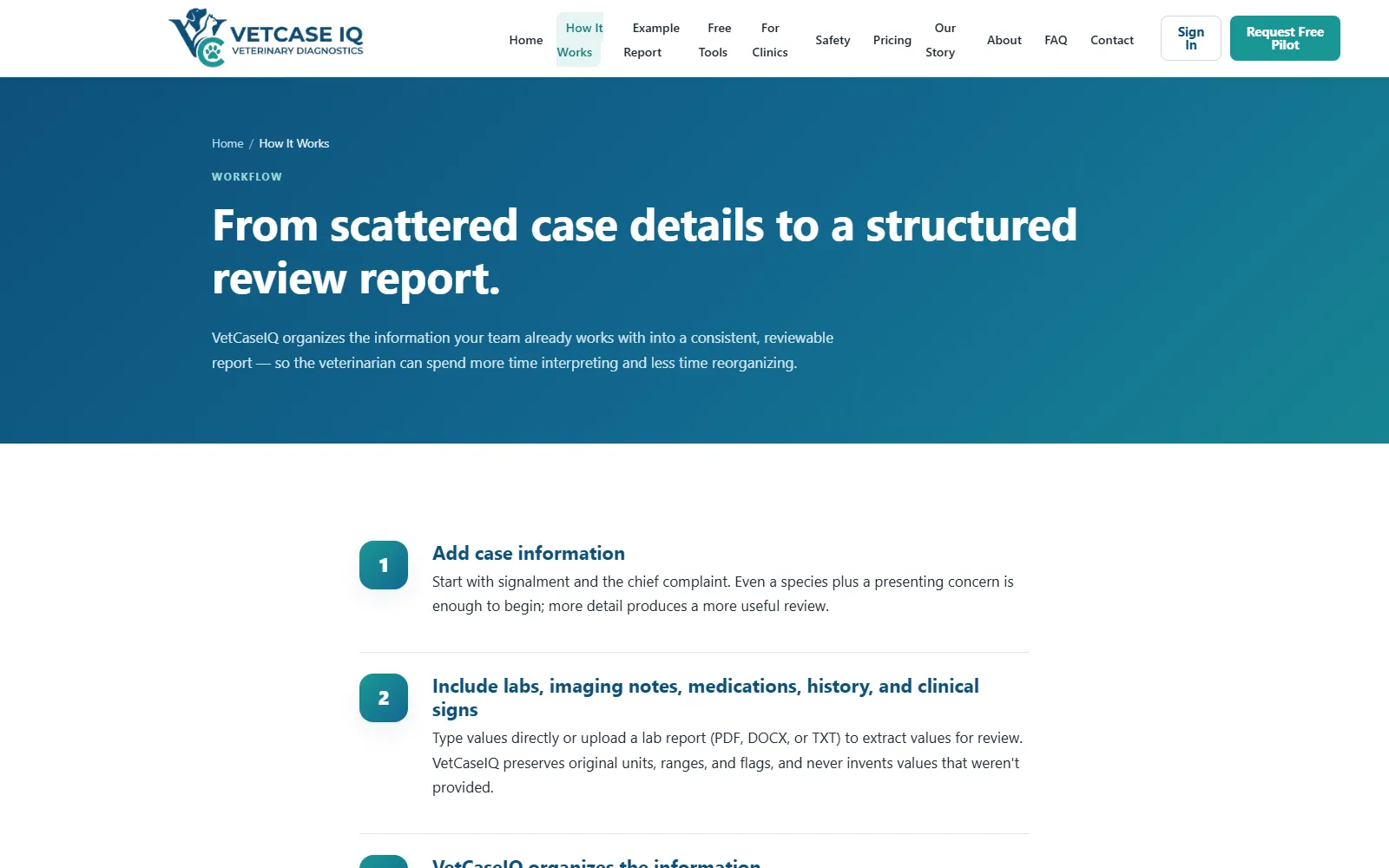
Veterinary cases arrive as a mix of history, exam notes, lab results, imaging reports, and referral documents. Summarizing that pile in one pass produces a confident paragraph with no way to check it. VetCaseIQ was built to do the opposite: turn the pile into structured information, work through it in stages, show its evidence, and retrieve real literature.
Honest expectations
Founder-led
No account managers and no handoffs. Ian Lehrer founded Webbify Studio after a career in finance and operations. At Hewlett Packard Enterprise, Ian supported forecasting, reporting, and analysis for a global facilities budget of approximately $400 million across more than 250 sites.
Read about Ian →Where this fits
Questions
When the work involves capturing structured input, processing it, and producing an output that someone acts on. A website presents information; an application runs a workflow. If a spreadsheet, a shared inbox, or a manual review step is the real bottleneck, that is usually the sign.
Next.js, React, and TypeScript for the application layer, with API integrations with external services and data sources as needed, deployed to cloud hosting. The stack is chosen to fit the problem and to remain maintainable by someone other than Webbify later.
Focused tools, internal workflows, and early-stage products: the kind of application one experienced developer can design, build, test, and deploy end to end. If a project needs a team of engineers, Webbify says so at the scoping stage rather than overreaching.
You do. The repository, the accounts, the deployment, and the documentation are yours, and the codebase is written so another developer could pick it up.
Describe the process and who runs it. Webbify will tell you whether it needs an application, what the first working version would be, and what it would take to build.